Design Your Calm Home Workspace: Small Steps to Focus Better
Create a peaceful, focused workspace at home with gentle ergonomic adjustments, natural light, and calming design. Start small with what matters most.
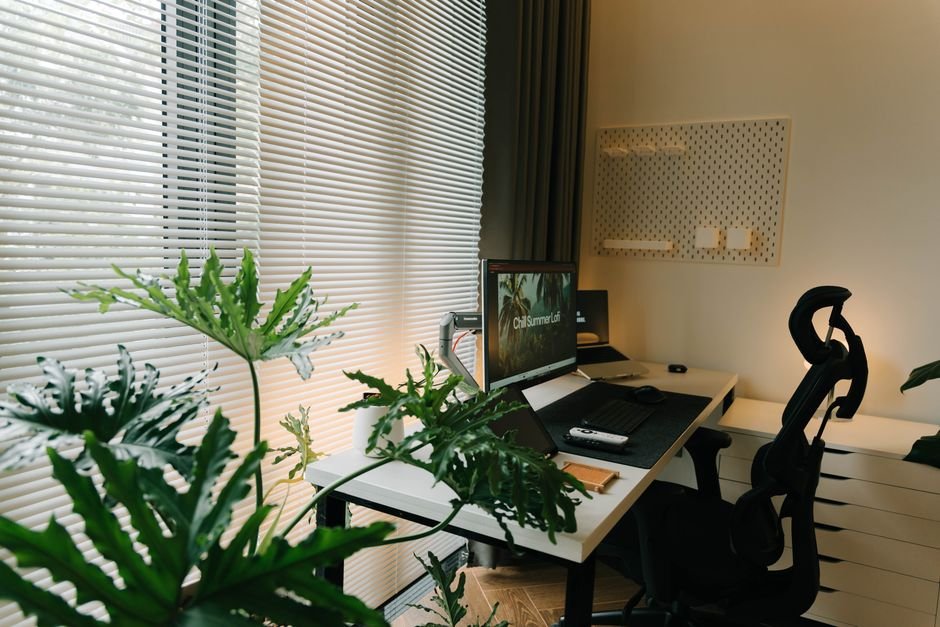
In short
- How you set up your desk affects your body, mood, and ability to focus—poor ergonomics can cause neck pain, eye strain, and stress.
- Natural light, plants, and quiet spaces help you feel calmer and work better, while good air quality and noise control reduce fatigue.
- Small adjustments like monitor height, regular movement breaks, and neutral colors create comfort without needing a complete overhaul.
Why Your Workspace Matters More Than You Think
If you work from home, you're probably spending a significant chunk of your day at your desk. The way that space is set up—from your chair to your lighting—shapes how you feel physically and mentally. Poorly designed workspaces can lead to musculoskeletal disorders including carpal tunnel syndrome, tendonitis, and lower back pain [1]. Beyond the body, there's a mental toll too: poor ergonomics can contribute to increased stress, anxiety, and depression [1].
The good news? Small, intentional changes make a real difference. A well-designed workspace can boost morale, reduce stress, and help prevent illness [3]. You don't need to overhaul everything at once. Start by understanding what matters most for your comfort and focus.
Get Your Body Position Right
Your posture is the foundation of a comfortable workspace. Here's what to aim for: keep your spine upright with your shoulders relaxed and your head balanced over your shoulders [4]. Your feet should rest flat on the ground or on a footrest—avoid letting them dangle or crossing your legs [4]. Your arms should settle naturally on your desk with your elbows bent at roughly 90 degrees, your wrists in a neutral position, and your shoulders loose [4].
Your chair matters. Look for one with adjustable height, lumbar support, and the ability to sit with your knees at a 90-degree angle [4]. Your desk should be at a height where your forearms stay parallel to the ground when you're typing [4]. Here's something important: no single sitting position is perfect for everyone all day long. Switching between positions and taking movement breaks throughout the day does more for your comfort than staying locked in one 'ideal' posture [5]. Shift your position every twenty to thirty minutes [5].
Avoid using your laptop keyboard and trackpad for extended work; instead, connect an external keyboard and mouse [4]. Keep both at a height that lets your wrists stay neutral and relaxed [4].
Reduce Eye Strain and Headaches
Improper monitor positioning, glare, and inadequate lighting cause eye strain [1]. The fix is straightforward: your screen should be at eye level to avoid straining your neck [4]. Adjustable monitor stands, anti-glare screens, and proper lighting can reduce digital eye strain symptoms like headaches and fatigue [1].
If you can't get natural light, LED lighting that mimics daylight helps reduce eye strain where natural light is limited [2]. There's also a simple technique: every 20 minutes, pause and gaze at something across the room or out a window for 20 seconds [4]. It's a gentle reset that gives your eyes real relief.
Bring in Light, Air, and Calm
Sunlight does more than brighten your space. Daylight helps your body stay in rhythm with your natural sleep-wake cycle and keeps your energy steady throughout the day [2]. It also lifts your mood and eases eye strain [3]. If your home office doesn't have a window, do what you can to let light in, even from an adjacent room.
Air quality matters too. Poor indoor air quality can cause fatigue, headaches, and respiratory issues [2]. Plants do double duty: they filter the air and create a sense of calm while boosting how focused and productive you feel [2]. Adding a few low-maintenance plants—a pothos, snake plant, or peace lily—is a gentle way to freshen your space. Bringing in natural elements like greenery and views of the outdoors supports both your sense of well-being and your ability to work well [3].
Color sets the mood. Soft, neutral tones create a peaceful feeling [3]. You don't need to repaint; muted grays, warm whites, or soft greens in small touches—a throw pillow, a small rug, or a framed print—can shift how the space feels.
Create Quiet and Reduce Distractions
Excessive noise is a common workplace stressor that disrupts concentration and increases anxiety [2]. If you live in a noisy environment, sound-absorbing materials help. Acoustic panels, carpets, and curtains help absorb noise and reduce distractions [2]. Even a simple bookshelf or fabric wall hanging can soften sound.
If possible, designate your workspace as a quiet zone during your work hours. Close the door if you have one. If you share your home, let others know when you need focused time. A pair of noise-canceling headphones or soft background music can also help you stay in your own calm bubble.
Move Regularly—It Changes Everything
Sitting for long periods is bad for posture and overall health [4]. When you stay still for too long, blood flow slows, your connective tissue tightens, and even your breathing can become shallow [5]. The antidote is movement. Getting up and moving restores circulation to your muscles, protects your spine, and clears your mind [5].
You don't need long workouts. Research shows that taking movement breaks lifts your mood, sharpens your focus, and improves the quality of your decisions [5]. Stand and stretch every thirty to sixty minutes; even two or three minutes of gentle movement counts [5]. Walk around your home, do a few squats, roll your shoulders. Throughout the day, mix sitting and standing, aiming for short standing periods of fifteen to twenty minutes [5]. These small shifts add up.
Start With What Matters Most
Creating a calming workspace doesn't require spending a lot or doing everything at once. Start with the adjustments that will have the biggest impact on your comfort: monitor height, chair support, and regular movement breaks. These are free or low-cost and make an immediate difference.
Then layer in the softer touches—plants, better lighting, a quieter corner. A well-designed workspace can significantly impact your wellness, engagement, and productivity [3]. The goal is to make healthy choices the easy default, so you can focus on your work and feel calmer while doing it [5].