Three Read-Aloud Picture Books About Gratitude, Sorry and Patience
Three short printable picture books for ages 4 to 7 about saying thank you, saying sorry and waiting patiently, and why reading aloud matters.
In short
- Three picture book PDFs for ages 4 to 7, each with a gentle lesson.
- Pediatricians urge parents to read aloud to young children every day.
- Picture books are a natural way to start talks about kindness and feelings.
- Each book is $2.99, and LAUNCH20 takes 20% off until November 10, 2026.
Big feelings, small words
Young children feel a lot and have only a few words for it. Waiting feels endless. A mistake with a friend feels huge. A thank-you feels too small to matter.
A story can hold those feelings for a moment, so a child can look at them from the outside. That is what these three short picture books try to do, each with one gentle lesson.
Why reading aloud still matters
The American Academy of Pediatrics formally urged parents to read aloud to their children daily from infancy, saying it helps build key language, literacy and social skills [2]. The academy also warned that more than a third of children in the US arrive at kindergarten not yet ready to begin reading [2].
Reading together is also simply time together. As one pediatrician put it on PBS NewsHour, reading gives a child the undivided attention of a parent or caregiver [2]. The AAP adds that it creates a stronger, more nurturing relationship [1].
- Ask questions as you read
- Repeat the fun sounds together
- Do not worry if a child wanders off for a moment
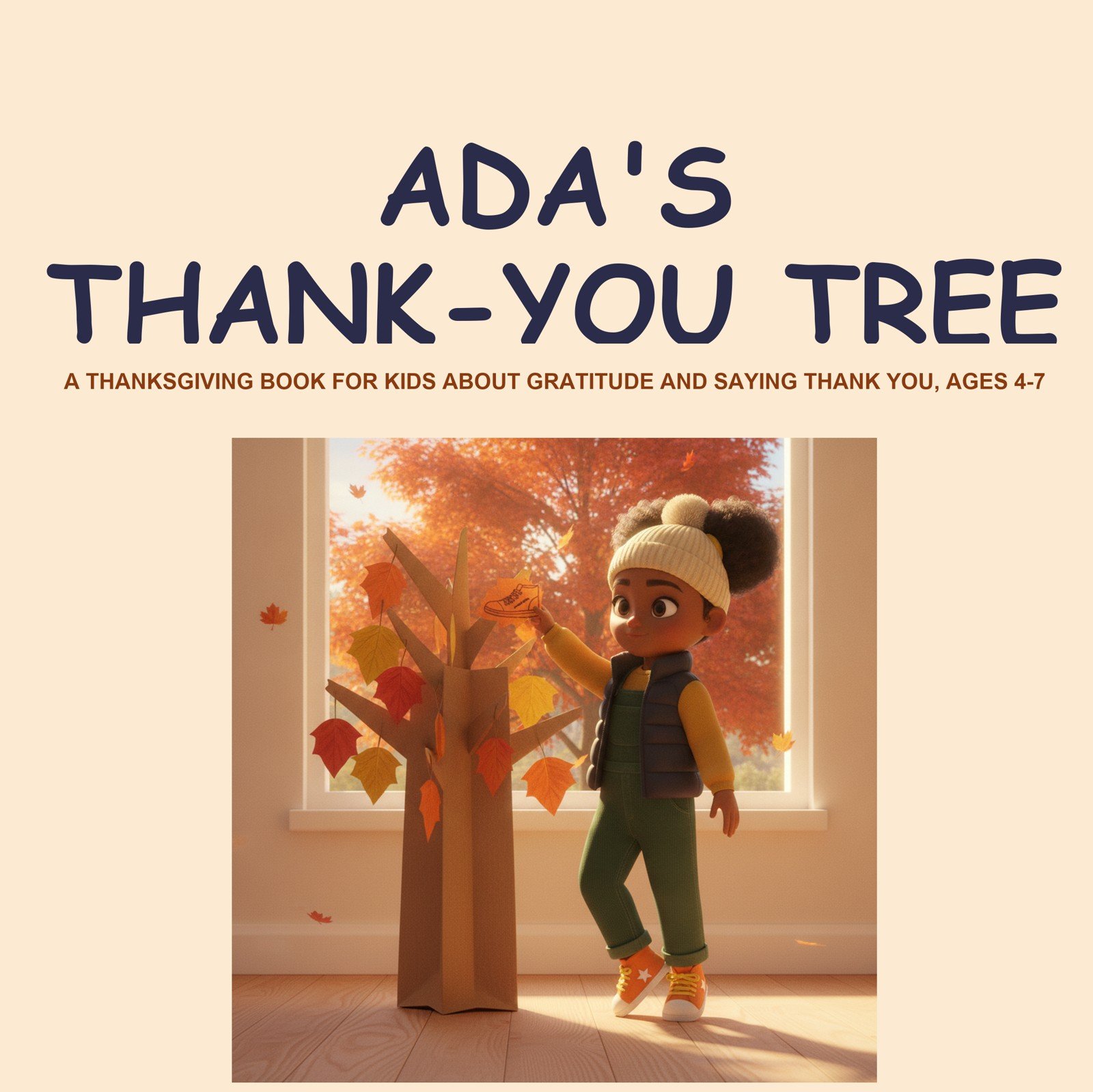
Ada's Thank-You Tree: is a little thank-you still a thank-you?
Grandma June's paper-bag tree has one bare branch, waiting for Ada's thank-you leaf. Everyone else writes big, curly words, and five-year-old Ada can only manage a wobbly A.
Over the holiday, Ada notices small kindnesses everywhere, and learns that gratitude is not measured by big words. It is a sweet starting point for a family thank-you tree of your own.
The Really Big Oops: learning a real sorry
When Theo's best friend Sam tumbles off his scooter and Theo laughs, a sunny picnic suddenly feels very different. His first shouted sorry does not reach Sam.
Theo learns that a real sorry means looking at your friend, naming what you did and showing you care. Picture books like this are a useful way to start a conversation about what it means to be kind in daily life [3].
Theo's Pumpkin Is Taking Forever: good things grow slowly
Theo has one seed and one big goal: the biggest pumpkin at the Harvest Fair. The neighbors' radishes pop up fast, but his pumpkin takes its time. Is it ready? Now? How about now?
With a wise grandpa next door and some new friends, Theo learns patience by watering, waiting and measuring. It is a good story for any child who finds waiting hard.
Making reading part of the day
The easiest habit is one tied to something you already do. A story after bath time, before nap, or while dinner is in the oven is easier to keep than a plan to read more.
Let your child pick the book, even if it is the same one again. Keep it short when they are tired. A single story read with a warm voice is plenty.
Grandparents and older siblings can join in too. A child who hears the same story from different people often starts telling it back, which is a lovely sign the words are sinking in.
How to read aloud so it sticks
You do not need to be a great reader. Slow down, point at the pictures, and let your child turn the page. Make the sound words big and silly, because those are the parts children join in on.
Health enews, citing the AAP, suggests pointing at and naming pictures for toddlers, asking young children questions, and not getting discouraged when short attention spans wander [1]. A few minutes a day matters more than a long session once a week.
Children often ask for the same book again and again. That repetition is part of how they learn the words and the lesson, so go with it.
Talking about the lesson without lecturing
The best conversations after a story are short. Ask what the character felt, and what your child might do. Then let it go.
For Ada's Thank-You Tree, you could ask who your child would like to thank this week. For The Really Big Oops, ask what makes a sorry feel real. For Theo's Pumpkin, ask about something your child is waiting for.
Reading programs that collect books about kindness and empathy use them in just this way, to open a talk about being kind in daily life [3].
Screens and picture books
These books are PDFs, so you may read them on a tablet. If you do, sit together and read out loud, the way you would with a paper book, and switch off other apps.
If you prefer paper, print the pages and staple them, or keep them in a folder. Either way, the time together is the part that counts.
How to use the books at home
Each book is a full colour PDF with 32 story pages, sized 8.5 x 8.5 inch. Read it on a tablet or computer side by side, or print it at home with the 'fit to page' setting. The illustrations are created with the help of AI.
After the story, ask one question: what would you have done? Each book is $2.99, for ages 4 to 7, and the code LAUNCH20 takes 20% off the whole order for the first 2 weeks, until November 10, 2026.
Get the printables
- Ada's Thank-You Tree - a picture book about gratitude (ages 4-7) - $2.99
- The Really Big Oops - a picture book about saying sorry (ages 4-7) - $2.99
- Theo's Pumpkin Is Taking Forever - a picture book about patience (ages 4-7) - $2.99
All books: payhip.com/bodymindbeing. Launch code LAUNCH20 = 20% off the whole order until November 10, 2026.